Introduction
As the calendar rolls into late spring, things start heating up fast in places like Joplin. That early surge of sun and warmth might feel nice after the winter, but for your home's exterior, it can bring the start of something less pleasant. We often hear from homeowners this time of year asking if the heat can actually damage their siding. The truth is, it can, and it often starts before summer even fully arrives.
A siding contractor in Joplin will usually see the early signs of heat wear right around this time. That is because siding materials start responding to high temperatures and sun exposure with small changes that build up quickly. Catching these signs before they grow into something bigger is a smart move, especially in a climate where the sun does not wait for the calendar to say "summer."
How Heat Affects Different Types of Siding
Every siding material reacts to heat a little differently, but none are completely immune to long exposure. Once the temperatures start climbing and the sun stays out for longer stretches, siding can start to weaken or change in ways that are not always obvious at first.
- Vinyl siding tends to soften when it gets too hot. That softening can lead to warping or buckling, especially if the panels were not installed with enough room to expand and contract.
- Wood siding can crack or dry out, especially if it is not properly sealed or painted. As it loses moisture, it can start to warp or pull away at the seams.
- Fiber cement is more resistant to temperature shifts, but it can still discolor or have surface issues from UV exposure if the finish wears thin.
Heat and UV rays work together to speed up these problems. Even in late spring, when the sun is not at full summer intensity yet, those repeated warm days start stacking damage. Discoloration, shiny patches, or subtle shifts in panel shape often mean the siding is getting too much direct heat too fast.
Bean Exterior Solutions offers siding repair, replacement, and inspection services for Joplin homeowners and businesses, using materials rated for weather extremes and backed by detailed workmanship.
Signs of Heat-Related Siding Damage
Not every problem announces itself clearly. But there are a few signs we look for when checking siding after a stretch of hot, sunny days.
- Bubbling or blistering on the panel surface usually signals that the siding is getting too much heat and is not able to breathe properly.
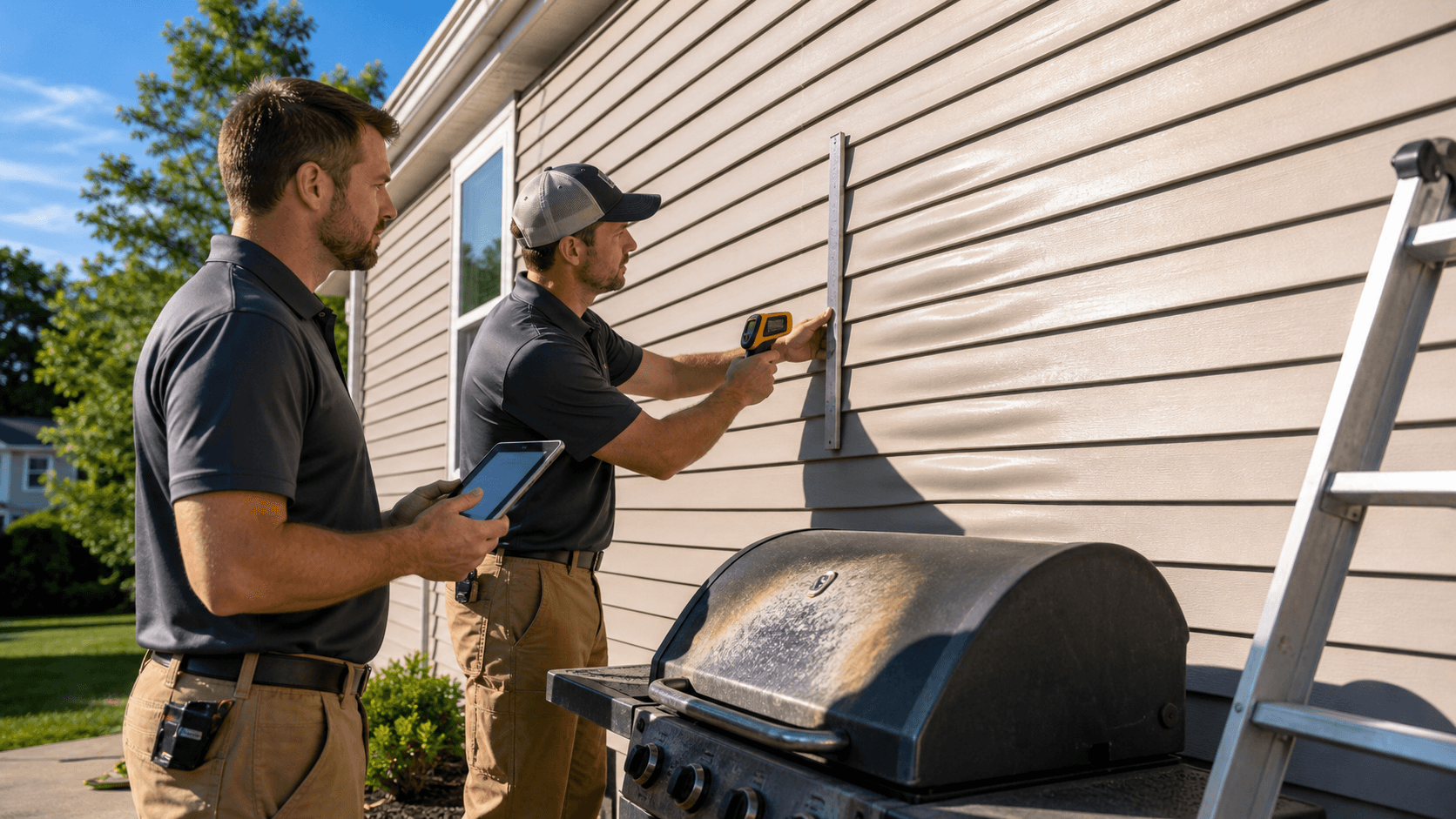
- Wavy or rippled shapes in what should be flat panels suggest warping, often from expansion and pressure.
- Gaps between panels or near seams can open as the material stretches and does not return to its normal shape.
- Unusual creaking or popping sounds, especially in the late afternoon or evening, can come from siding shifting against fasteners or expanding more than it should.
These signs may seem small at first, but they tell you that the siding is under stress. If they show up in more than one spot, it is usually time to take a closer look before the heat of summer piles on.
Why Late Spring Is the Right Time to Check Your Siding
Late spring is a perfect moment to catch siding problems before they become worse. The weather is not yet overwhelming, but we have usually seen enough warm days to start noticing changes on the surface.
- In places like Joplin, spring storms followed by hot days create conditions that speed up siding wear. Water from storms combined with sun-driven drying can cause materials to shift faster than usual.
- A quick siding check in late May lets you spot expanding seams or light surface discoloration before it gets worse.
- This is a good time to walk around the house and look for anything that has changed in the last month or two. Even a small ripple could be the start of a bigger issue.
Getting ahead of extreme summer heat means fewer surprises later. A siding contractor in Joplin can recognize these seasonal patterns and help pinpoint which changes need your attention and which ones are just cosmetic.
When to Call a Pro to Step In
We always suggest paying close attention to how siding looks and feels. But knowing when a pro should step in makes a difference.
- If siding is pulling away or has big gaps, that is usually beyond a quick repair. It might mean sections need to be replaced to stop moisture from seeping behind.
- If you see widespread warping, color changes, or bubbling across multiple panels, it is time to assess whether the material itself is failing from too much heat or age.
- Professional inspections can reach areas you cannot, like behind panels or near rooflines, and they come with tools to test for moisture or structural movement without making holes.
Bean Exterior Solutions provides full exterior inspections, moisture checks, and advice on the right products for your property, making it easy for local homeowners to address damage before it spreads.
Handling these early in the season helps avoid bigger, more costly projects in the middle of summer. Plus, fixing things now usually means less disruption down the line.
Protecting Your Home, One Panel at a Time
Siding is your home's outer shell, keeping out heat, water, wind, and pests. When it starts to wear from temperature shifts, it weakens the whole system. That is why keeping an eye on it as the weather warms up is not just about appearance, it is about catching trouble before it spreads.
Regular heat-related damage might not show all at once. That bubbling patch or creaky noise could be the first warning. Taking it seriously protects more than the walls. It keeps your home cooler, looking sharp, and functioning like it should as we head into another long stretch of summer sun. And when each panel works like it is supposed to, your whole space stays stronger and more comfortable all season long.
Noticing something unusual with your siding or feeling like the Joplin heat is starting to take a toll? Spring weather can cause materials to change quickly, and addressing minor issues now with help from a trusted siding contractor in Joplin can save you from bigger repairs later. At Bean Exterior Solutions, we are ready to help you spot any concerns before they turn into major problems. Give us a call to schedule an inspection and make sure your home is ready for summer.