When summer weather rolls in, roof leaks aren't always the first thing that comes to mind. But once the heat kicks up and the storms follow, even small unnoticed problems up top can suddenly turn into issues inside your home. Between unexpected downpours and long stretches of heat, roofs tend to take a beating this time of year.
Getting ahead of those problems makes all the difference. With the right roofing services, those leaks can often be prevented before they ever begin. As summer gets closer, now's the time to take a closer look at how to avoid trouble when the weather turns.
What Makes Roofs Leak During Hot Weather
Summer heat doesn't just make the air feel heavy. It affects your roof in ways that aren't always visible from the ground. Materials like shingles, seals, and flashing start to break down when exposed to weeks of intense sun.
- Prolonged UV exposure dries out fiberglass and asphalt shingles, making them brittle and more likely to crack.
- Summer storms bring wind-driven rain that slips into weak points around joints or flashing.
- Quick temperature changes, especially after a downpour, cause roofing materials to expand and contract.
- Poor airflow in the attic or backed-up gutters can trap moisture and push that trapped moisture under the surface.
When small stress points add up, leaks often follow. And what starts as a minor issue like lifted flashing or pooling rainwater can grow if ignored during peak summer weather.
Warning Signs to Watch Before Leaks Show Up
You don't always see a drip on the ceiling right away. Most leaks give off early warning signs long before water starts leaking into the living space.
- Warped or curled shingles can show that heat damage is setting in.
- Flashing that looks raised, rusted, or separated from the roof line may be letting water in.
- Dark or discolored spots on ceilings could mean moisture is already at work.
- A musty smell inside the attic or hallway might be mold starting to grow nearby.
- Gutters that look saggy or pull away from the house may be collecting more water than they should.
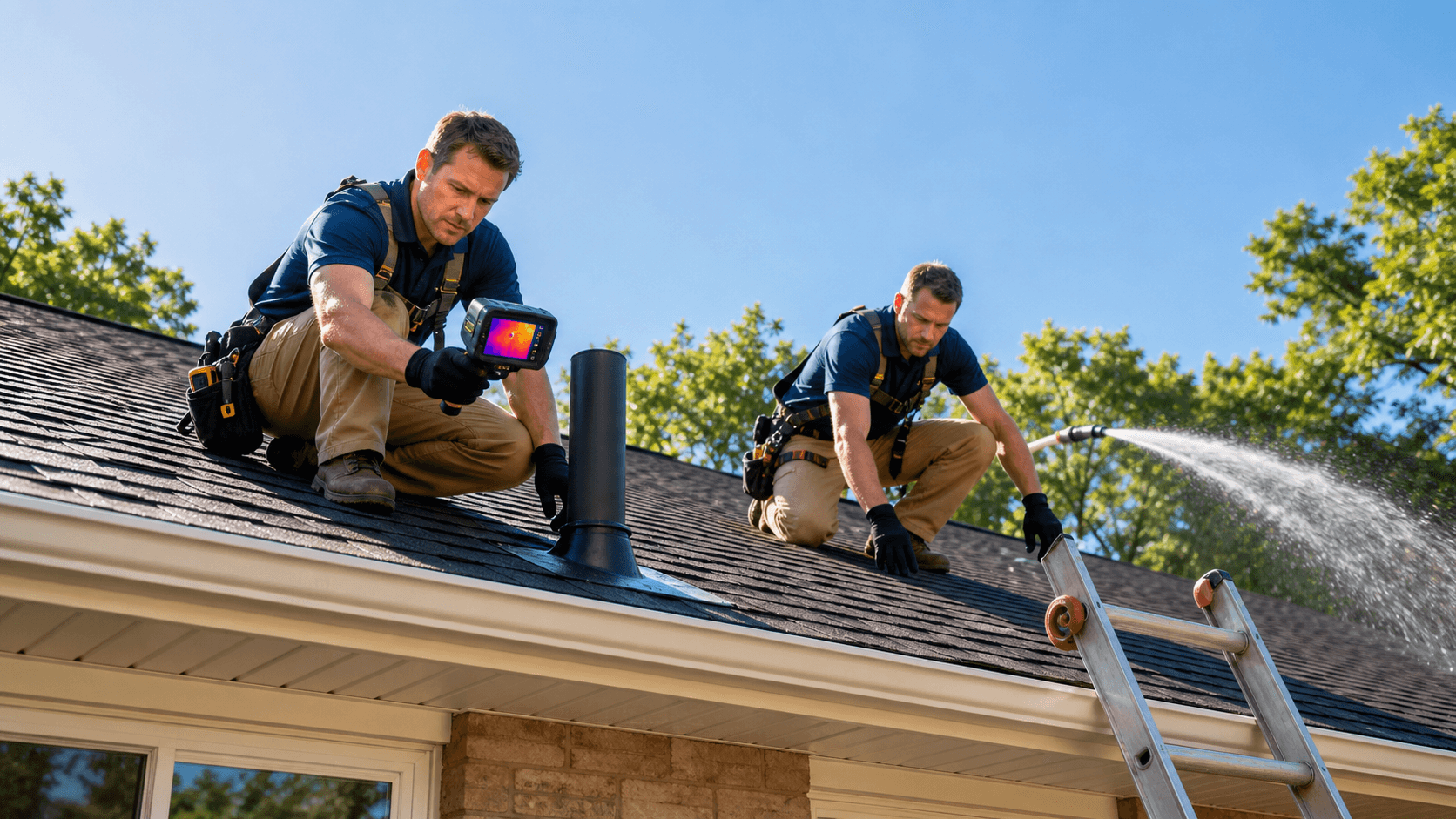
These signs aren't always obvious without a closer look, which is why having reliable roofing services that inspect early in the season matters. Detecting the small stuff in June saves a lot of stress by July.
Key Areas That Need Regular Summer Checkups
Not every spot on the roof poses the same risk. Some areas are more likely to cause problems once the summer weather starts to take hold.
- Valleys where two slopes meet can collect debris and channel water into tight spaces.
- Flashing around vents, chimneys, and exhaust fans is often the first part to show wear.
- Gutters and their downspouts should always be clear since slow drainage pushes water back under shingles.
- Skylights, if not sealed properly, tend to leak when rain blows sideways during heavy storms.
- Areas near roof joints or where different angles meet might hide small cracks or missing granules.
Trouble often starts small and quietly, especially in these less-visible zones. A routine check lets us find these risk points before moisture has time to get in and cause major damage.
Bean Exterior Solutions provides full-service roofing, from inspections and repairs to maintenance and complete replacements. Our local knowledge helps in predicting areas most vulnerable during Missouri's summer storms, and we use industry-leading materials designed to stand up to heat, humidity, and wind.
Maintenance Moves That Stop Leaks in Their Tracks
Small steps early in the season do a lot to prevent larger problems later. The goal is to keep water moving away from the roof and avoid letting heat dry out or loosen any part of the structure.
- Seasonal roof cleaning removes leaves, twigs, and buildup before they trap moisture under shingles.
- Sealing exposed nails or resecuring flashing reinforces places most likely to let water in.
- Ventilation plays a big part too. Without enough attic airflow, heat builds up under the roof and stresses materials from below.
- Making time for routine checks before big storms land reduces the chance of an emergency visit after the fact.
No single fix handles all leak risks, but regular habits and early season attention stack the odds in your favor. Getting ahead of it is easier than repairing damage afterward.
How Roofing Services Help You Stay Ahead of Problems
It's often hard to spot problem areas without stepping up on the roof. And if something gets missed, it might not show up until rain is pouring in through the ceiling. That's why working with roofing services familiar with summer patterns and common issues in places like Joplin is so helpful.
- A full check evaluates the condition of shingles, seals, flashing, and more, not just what's easy to see.
- Preventative fixes like resealing or reattaching protect more thoroughly than waiting for leaks to appear.
- Local knowledge of weather patterns helps us know where to look and what tends to wear down first in this area.
Seasonal maintenance works best when it doesn't wait for a crisis. With each check, we're looking to protect what's already working and extend the life of the roof so there are no surprises when those summer storms hit hard.
Protect Your Home Before the First Summer Storm
Once summer arrives, it doesn't take long for heat and storms to push your roof to the limit. That's why preparation needs to happen before issues start. It's always easier to patch a small crack or reseal a loose shingle than dry out a wet ceiling or tear out moldy insulation.
Staying alert to the signs and giving attention to the roof's high-risk areas really does make a difference. When everything's working correctly, your home stays cool, dry, and quiet even when the storms outside say otherwise. Starting summer with a solid plan now means fewer headaches and more peace of mind all season long.
Summer storms are right around the corner in Joplin, and small issues like leaks or brittle shingles can quickly become costly problems. At Bean Exteriors, we help homeowners stay prepared with dependable support and timely repairs suited to our local climate. Our experienced team is ready for everything from quick fixes to full inspections, always delivering reliable care you can trust. Schedule your summer checkup today and let us handle your trusted roofing services before the next storm arrives.