Late summer in Missouri brings more than just sunshine and long afternoons. The heat can sneak up on parts of your yard you don't usually think about, especially your fence posts. It may not be obvious at first, but the combination of high heat and dry ground can really wear down wooden posts. As the temperature rises and the soil shifts, those strong-looking posts can start to crack or loosen a lot faster than expected.
If you're seeing small gaps near the base or noticing a few posts leaning to one side, this could be a sign that your fence isn't handling the heat well. This is when it makes sense to let a fence installation contractor take a closer look, especially before fall rolls in and hides the damage under leaves or rain. The sooner we catch potential problems, the easier they are to fix.
How Heat and Soil Shifts Affect Fence Posts
Missouri summers, especially in places like Joplin, can really put pressure on anything stuck in the ground. Fence posts are no exception, and the way the ground reacts to heat makes a big difference.
- When the soil starts drying out in the sun, it can shrink or crack, pulling away from the post and leaving it less stable. What felt tight in spring may feel loose by August.
- Wood acts differently under heat too. It can expand when temperatures peak and then suddenly contract as it cools off at night. That back-and-forth can lead to cracking in the post, especially near spots where pressure is already building.
- The soil type doesn't help much either. Our region has a lot of clay, and that kind of ground expands when it's wet and pulls back when it dries, giving your fenceposts a push-and-pull they weren't built to handle long-term.
This mix of pressure, shrinking soil, and hot wood makes late summer a rough stretch for fences that were installed without this in mind.
Signs Late Summer May Be Causing Fence Damage
Sometimes fence damage is easy to overlook. A small crack or wobble can feel like no big deal, but those little signs are exactly what matter this time of year.
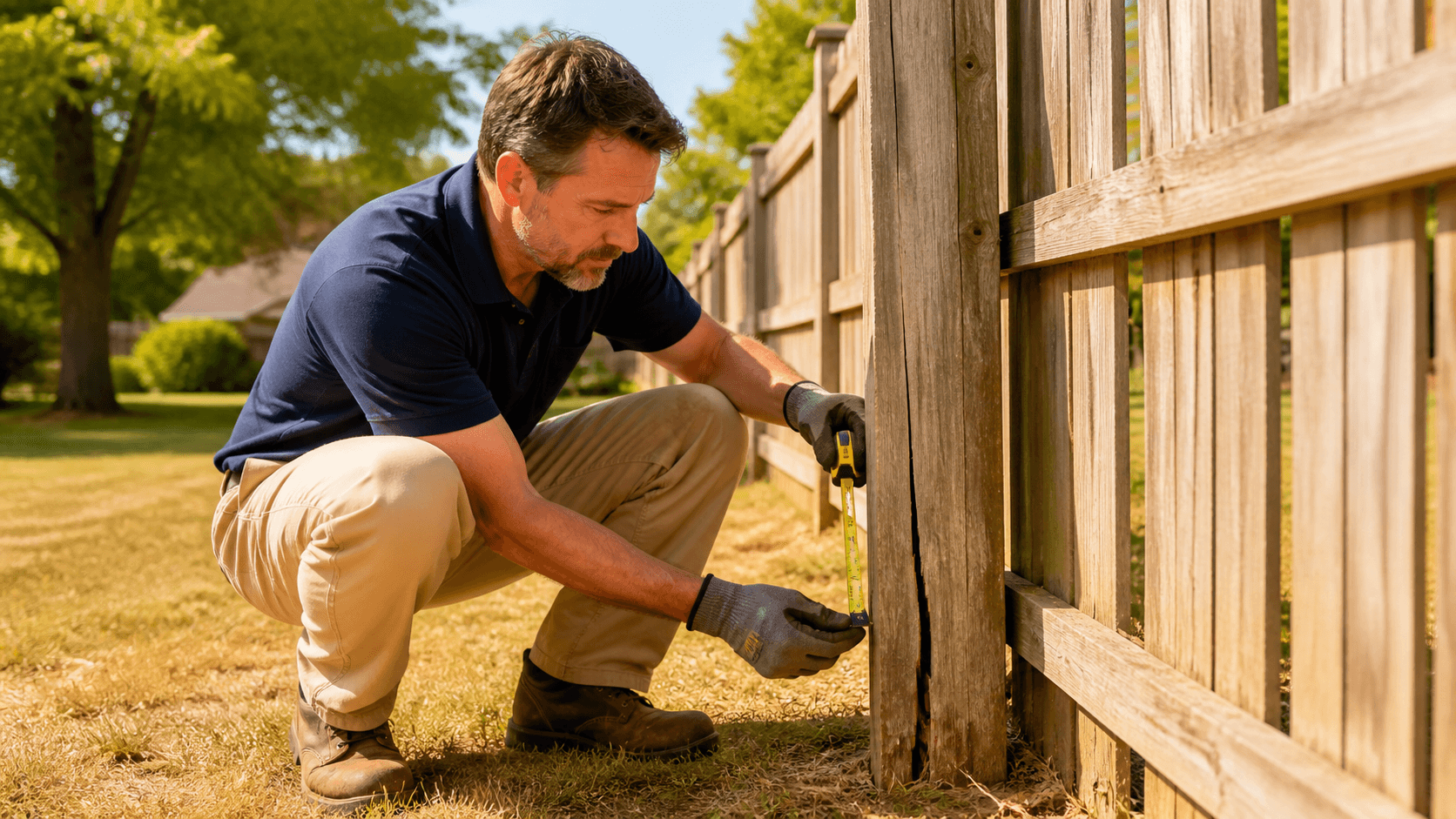
- The most common first sign is cracking near the bottom or in the middle of the fence post. It's where the wood takes the most pressure from shifting soil.
- Posts that sway or lean after a stretch of dry, hot weather usually point to weakened support underground. Even if the top rail looks fine, the base might be struggling.
- Gaps between the post and the soil are another red flag. If you can see a space where there used to be a tight seal, the ground has likely dried out too much.
Catching these issues early gives us a better chance to step in before a full replacement is needed.
Why Timing Matters for Checking Fence Stability
The urge to wait until fall to deal with outdoor repairs is common. But when it comes to fences, that wait could cause more trouble.
- Once fall rainstorms start, they can make everything look stable on the surface. Water fills soil gaps temporarily, hiding damage and making fence posts feel tighter than they really are. That's why dry-season checks are so valuable.
- Late summer, just before the weather turns, is often the best time for a professional to walk the fence line and see how each post is holding up.
- A fence installation contractor can tell whether the problem came from heat, soil, or aging materials, and they can spot weak spots most people miss.
Acting now instead of waiting until colder weather hits makes inspections quicker and repairs easier. If we wait too long, that small crack might become a full break.
When Repairs Aren't Enough: Planning for Replacement
Spot repairs work well when a fence has just a couple of weak points. But if damage keeps showing up in new areas, it might be time to think about a broader fix.
- Cracked or loose posts can sometimes be braced, but if this happens every summer, those quick fixes won't hold much longer.
- New posts, and newer materials, are built with changes in weather in mind. Some options can better stand up to the summer heat swings we get in Missouri.
- A professional can look at the big picture and help decide when to stop patching and start fresh. Sometimes a few strong updates now can save a lot of money and hassle later.
Bean Exterior Solutions offers fence inspection, repair, and replacement services for residential and commercial customers in Joplin and surrounding areas. Our team specializes in using durable materials and installation methods that are selected for their performance in Missouri's changing weather.
We've seen plenty of fences that looked fine one season and didn't survive the next. Knowing when to shift from repair to replacement is part of protecting the entire structure.
Don't Wait for a Full Break: Protect Your Fence Investment
Missouri summers don't always leave visible problems right away. That's why it's easy to miss early signals that your fence is under strain. A few small cracks or loose spots now won't fix themselves, and waiting usually means bigger repairs later.
Quick checks in late summer give us a chance to spot the early stages of damage before storms and cooler nights arrive. That way, we're not playing catch-up during a busy fall or winter. Taking a few minutes to look now is usually all it takes to prevent a much bigger job later on.
Leaning posts, cracked wood, or shifting soil around your fence could mean the summer heat has already started to cause problems. Before fall weather hides these early warning signs, having a trusted fence installation contractor inspect your yard can help prevent more costly issues down the road. At Bean Exterior Solutions, we're committed to keeping your property looking its best and your fence in great shape. Contact us today to schedule an inspection before the season changes.